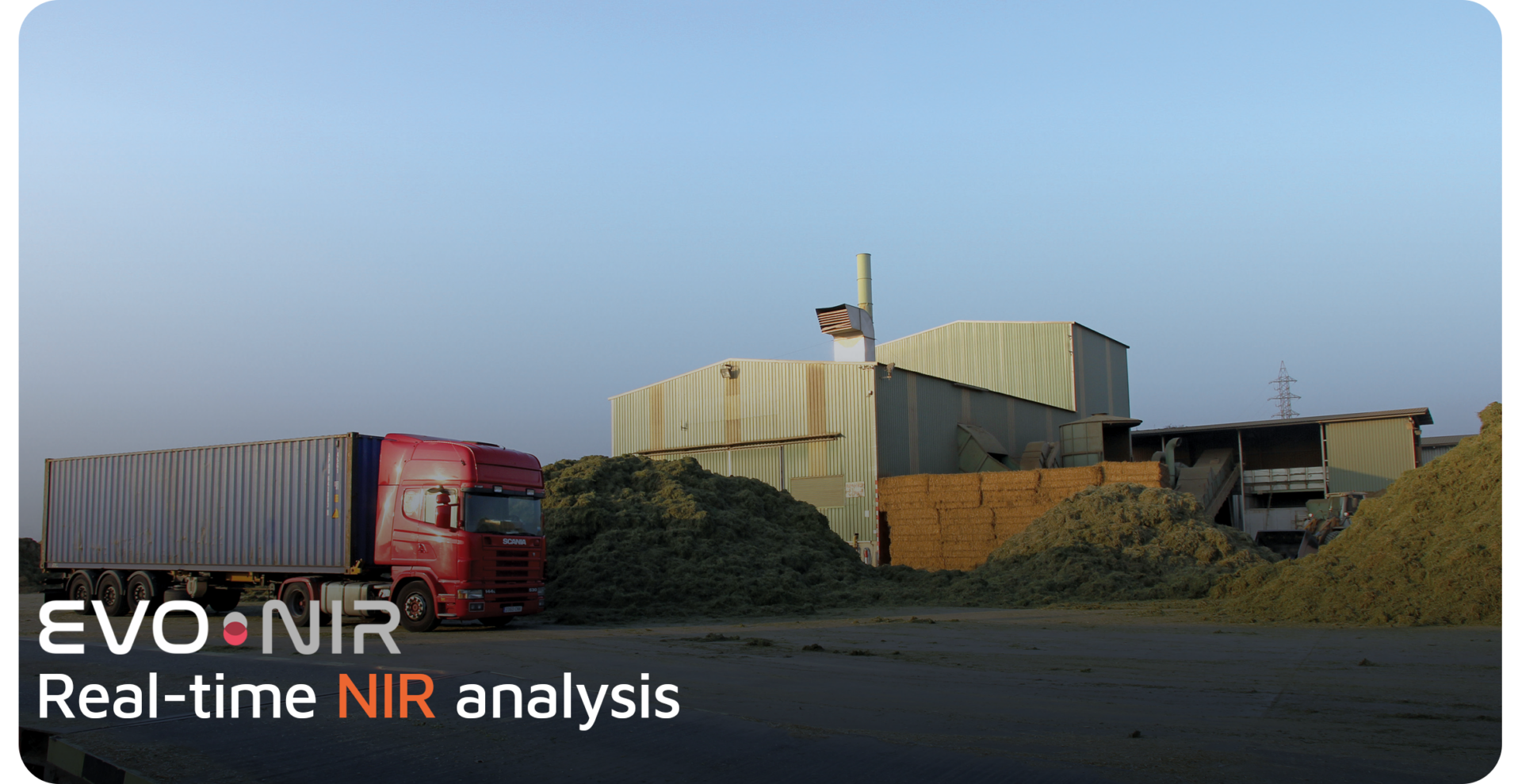
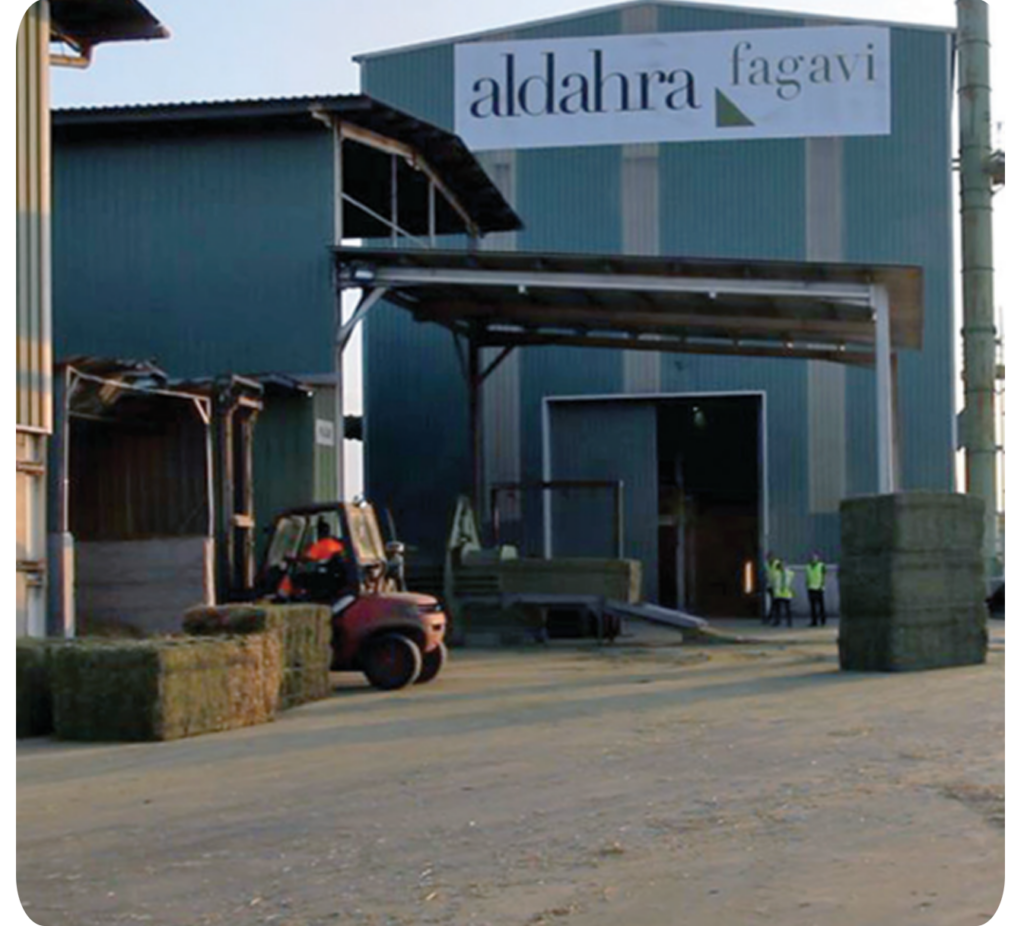
Al Dahra Fagavi processes and commercializes forage in the Ebro Valley in Spain, one of the most important irrigated agricultural areas in Europe.
The company operates several production and logistics facilities in Aragón and Cataluña, including plants in Bujaraloz, Linyola, Vila-sana, Ivars d’Urgell, Torregrosa and Bellvís.
Today the company processes more than 360,000 tons of forage every year, including alfalfa hay and dehydrated corn. In total, Al Dahra commercializes between 500,000 and 600,000 tons of forage annually for livestock nutrition markets.
Producing forage at this scale requires strict monitoring of crop quality, yield and sustainability.
According to Miquel Pons Lloreta, Quality Director of Al Dahra Europe, the forage sector still lacks modern monitoring systems.
“Most forage plants still analyze moisture, protein and fibre in laboratories. Only a few facilities use in-line analysis during production.”
Laboratory analysis provides reliable results, but it does not allow operators to monitor forage quality during processing.
Without real-time data, producers cannot immediately classify forage batches or adjust the production process.
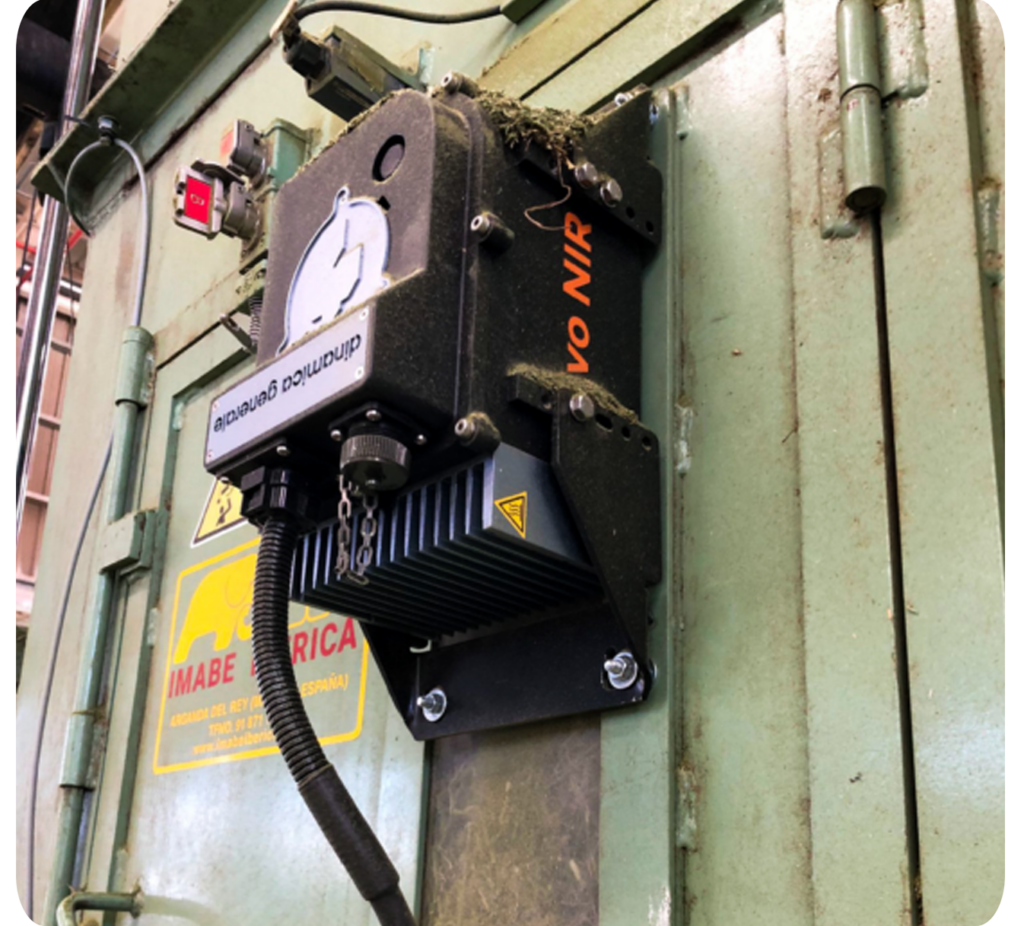
To improve process control, the company installed EVONIR, the online NIR analyzer developed by Dinamica Generale.
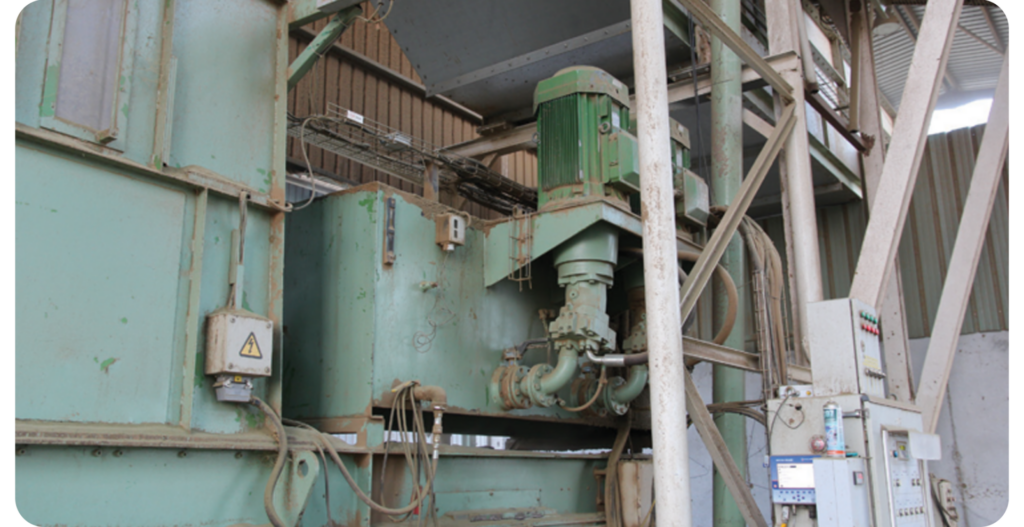
The system performs in-line analysis directly on the production line during bale processing.
Operators can continuously measure key parameters such as:
The sensor scans the forage while production is running. This allows operators to monitor quality in real time.
After the first installation, the system calibration improved progressively. Today the plant relies on the system for daily moisture and protein monitoring.
One of the main benefits of the system is continuous data collection.
The system wirelessly transfers the analysis data to the management software. The software tracks every production batch during processing.
At the end of the process, each bale receives a barcode containing its quality data, including moisture and protein values.
This approach allows the plant to classify forage by quality level and provide more transparent information to customers.
According to Al Dahra, modern forage plants need tools that provide real-time visibility of production quality.
Monitoring forage parameters during processing helps producers:
For large forage processors, in-line NIR analysis represents an important step toward modern and data-driven production.



 NIR & Imaging
 Data Management
 Mobile Apps
 Load Cells
 Indicators and ECU
 Accessories
 English
 Italian
 Spanish
 French
 German
 Portuguese (Brazil)
 Dutch
Dutch Polish
 Chinese (Simplified)
 Turkish
