Modern dairy farming is changing.
While productivity remains important, the world’s most successful dairy businesses are increasingly measuring performance through dairy farm profitability rather than production alone.
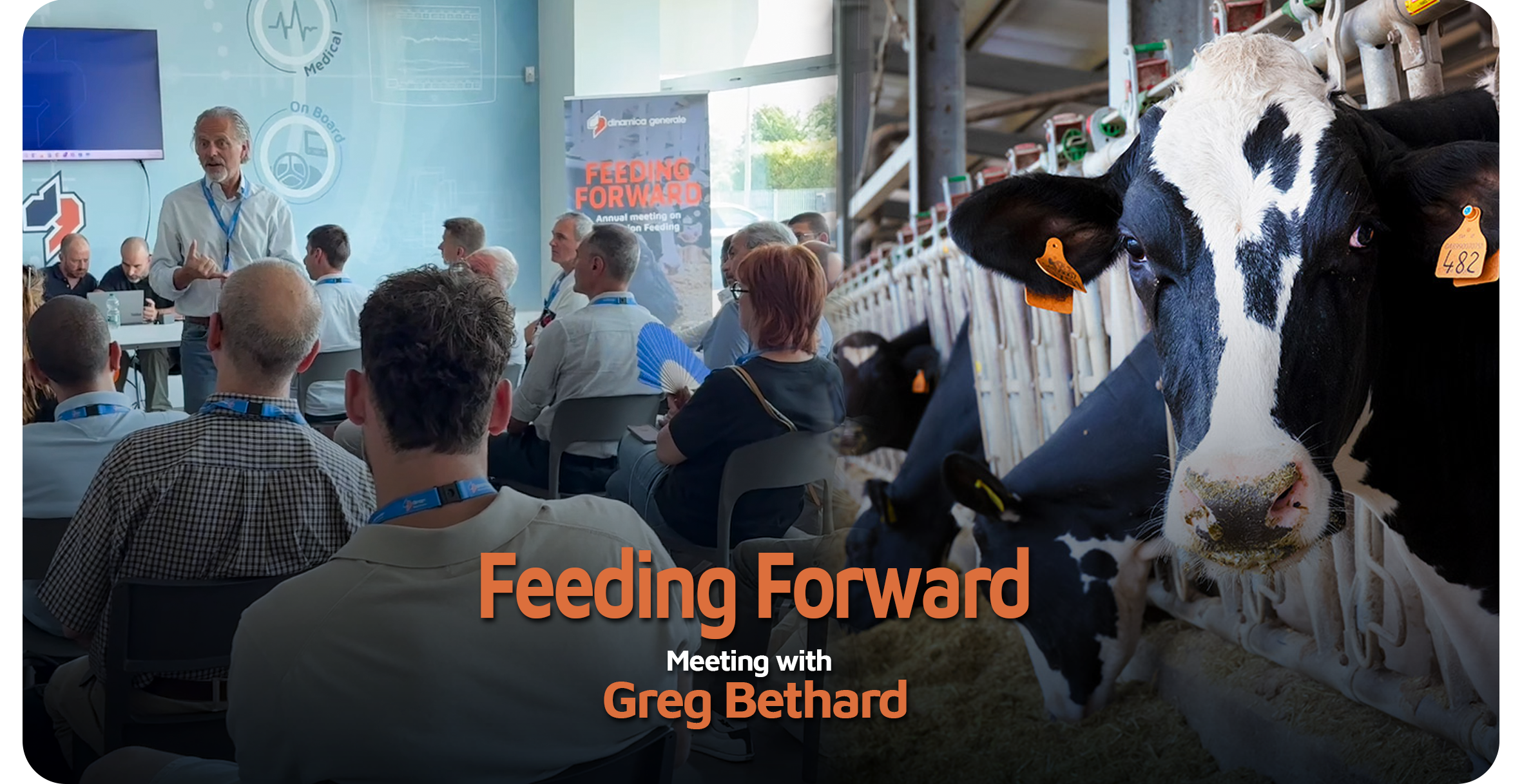
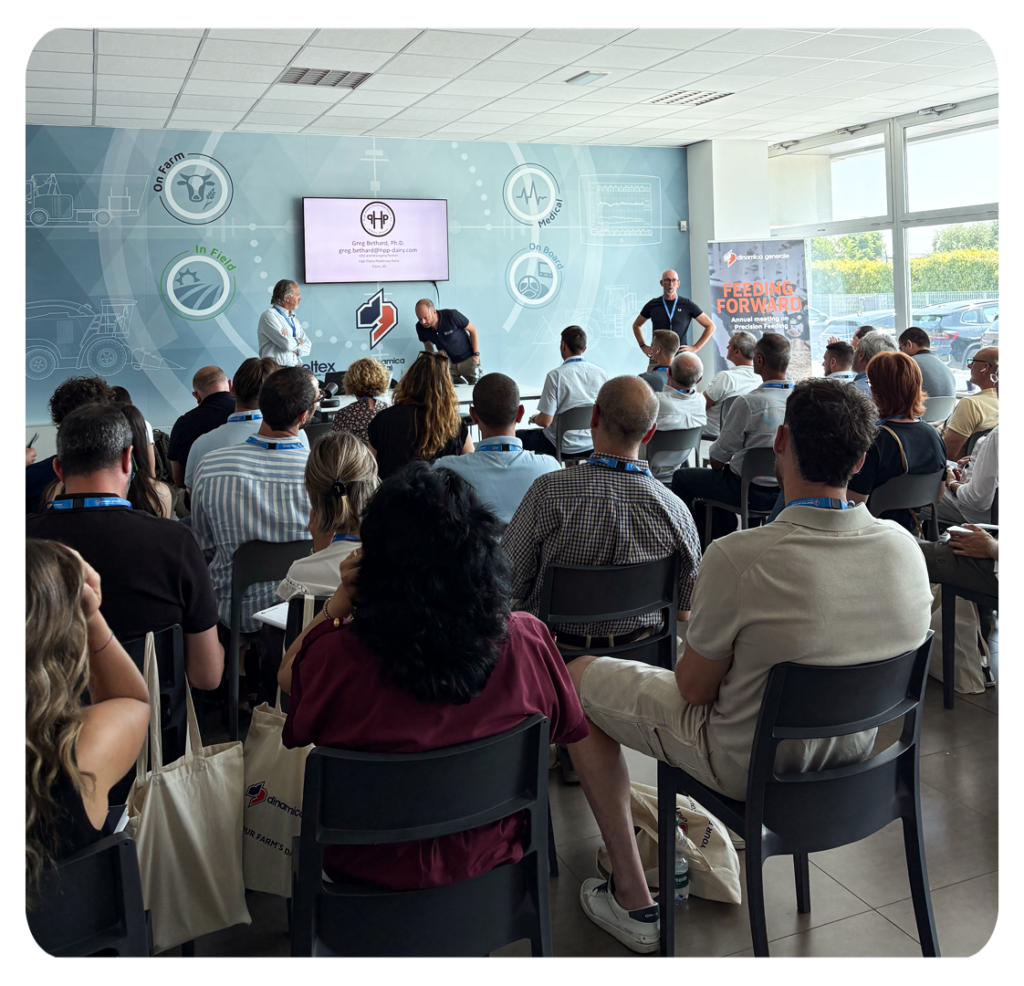
This was one of the key messages shared by Greg Bethard, CEO and Managing Partner of High Plains Ponderosa Dairy, during the first edition of Feeding Forward, the annual Dinamica Generale event dedicated to precision feeding, innovation and dairy management.
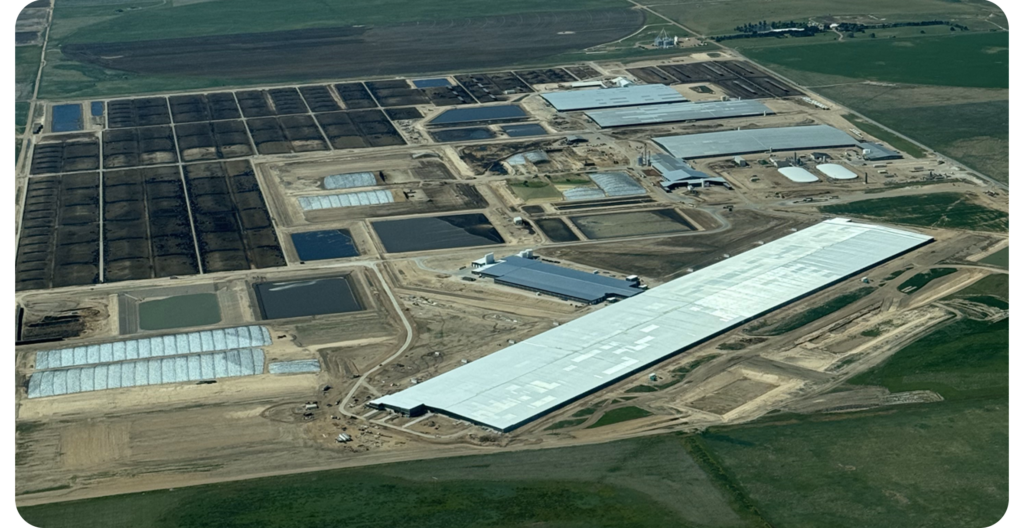
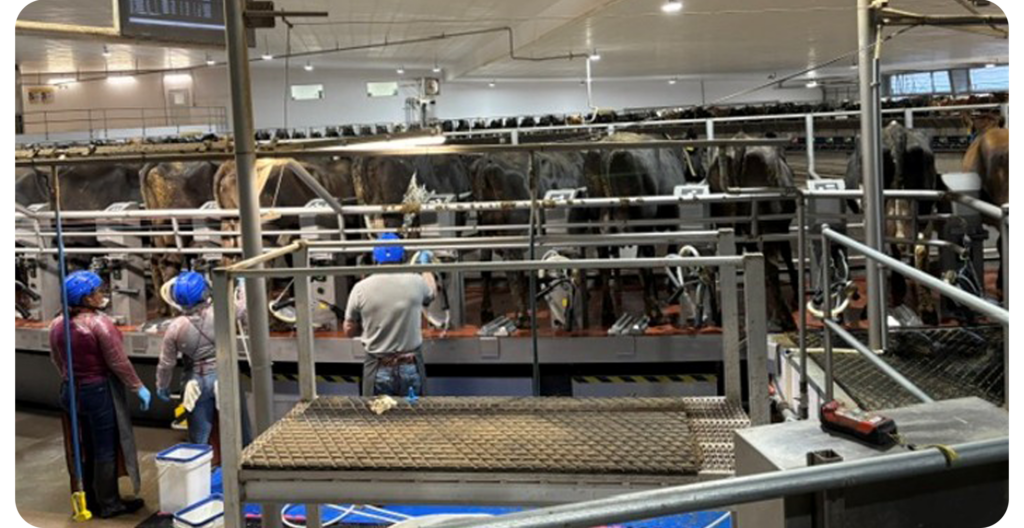
Managing more than 40,000 milking cows across multiple rotary parlors in Kansas, Bethard presented a practical approach built around data, economics and operational efficiency rather than traditional production indicators.
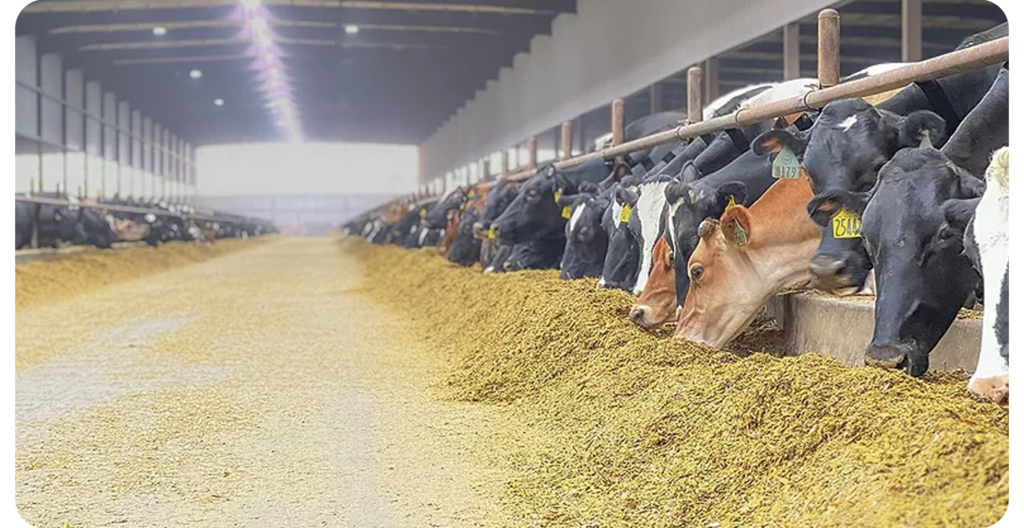
Regardless of farm size or geographical location, feed remains the largest operating expense in milk production.
For this reason, improving feeding decisions often has a greater economic impact than simply increasing milk yield.
However, Greg Bethard challenged one of the most common assumptions in dairy management.
Higher feed efficiency does not necessarily mean higher profitability.
Feed efficiency is traditionally expressed as kilograms of milk produced per kilogram of dry matter intake. At first glance, cows producing more milk from less feed appear to be the most efficient. Yet this indicator alone can easily lead to the wrong management decisions.
During the presentation, Bethard compared two cows.
The first produces less milk but achieves a higher milk-to-feed ratio.
The second consumes more feed, produces considerably more milk and appears less efficient according to the traditional index.
Despite the lower feed efficiency, the second cow generates higher Income Over Feed Cost (IOFC) and therefore creates more value for the business.
The lesson is simple.
The objective should not be maximizing feed efficiency.
The objective should be maximizing profitability.
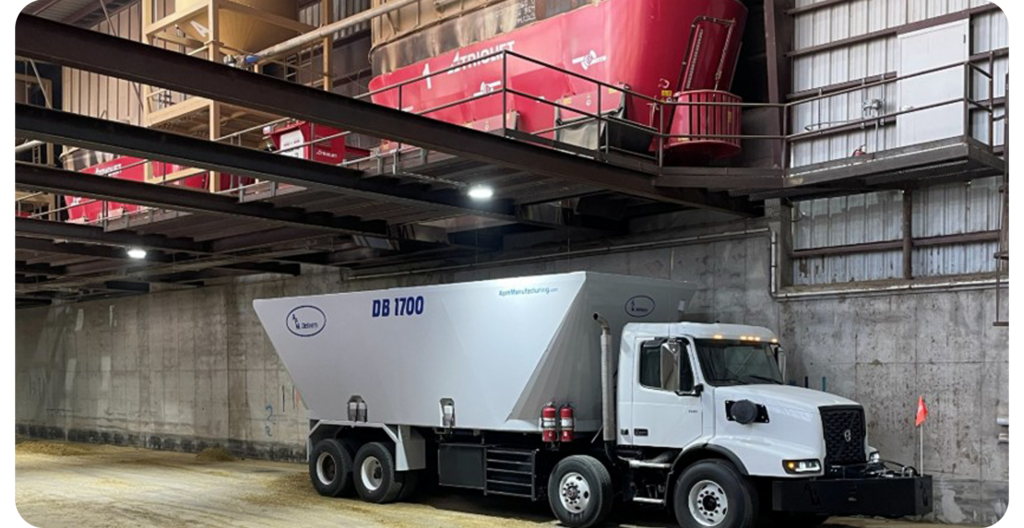
Rather than focusing exclusively on production or feed conversion, High Plains Ponderosa Dairy evaluates cows using Income Over Feed Cost (IOFC).
This KPI measures the income generated after subtracting feeding costs.
Because both milk price and feed costs constantly change, Bethard also presented a methodology based on separating market effects from cow performance, allowing managers to understand whether profitability changes originate from economics or biological performance.
This creates a much clearer picture for management decisions.
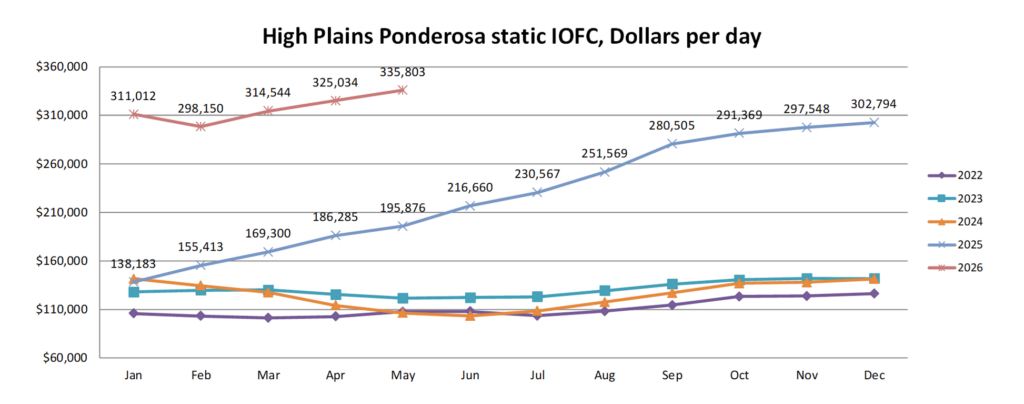
One of the strongest messages throughout the event was remarkably straightforward: data should drive decisions, not assumptions.
At High Plains Ponderosa Dairy, data support monthly IOFC calculations, dry matter intake analysis, culling decisions and herd performance monitoring. Production metrics remain important.
However, they are interpreted within a broader economic framework rather than being considered objectives themselves.
Precision feeding today is no longer limited to ration formulation.
It combines weighing systems, NIR analysis, software platforms, intake monitoring and economic KPIs into one integrated decision-making process.
Only by connecting these data sources can farms continuously optimise feed costs while maintaining productivity and profitability.
This evolution is transforming feeding management into a strategic business process rather than a purely nutritional activity.
Beyond feeding, Bethard also shared insights into the development of one of the largest dairy operations in the United States.
Topics included facility design, cow flow, expansion planning, workforce management, financial governance and the importance of building scalable systems before increasing herd size.
The common denominator was clear:
Successful dairy businesses are designed around processes, data and long-term planning.
The event marked the launch of Feeding Forward, Dinamica Generale’s annual initiative dedicated to bringing international expertise to dairy professionals.
Each edition will host leading farmers, nutritionists, researchers and industry experts to share practical experiences, innovative management strategies and the latest developments in precision feeding.
Because advancing dairy farming requires more than technology. It requires the exchange of knowledge between the people who use it every day.


 NIR & Imaging
 Data Management
 Mobile Apps
 Load Cells
 Indicators and ISOBUS-ECU
 Accessories
 English
 Italian
 Spanish
 French
 German
 Portuguese (Brazil)
 Dutch
Dutch Polish
 Chinese (Simplified)
 Turkish
