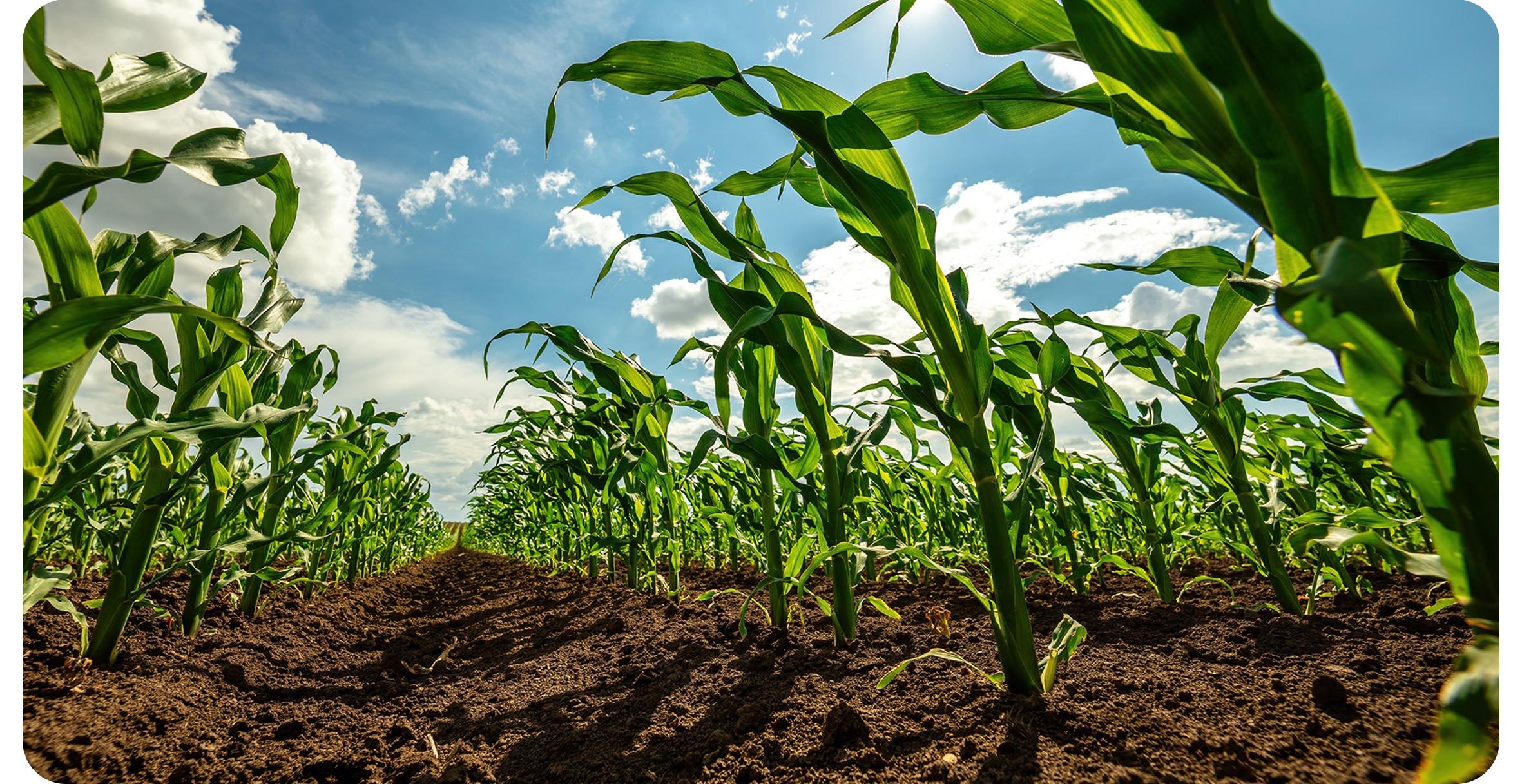
Agriculture and food production are entering a new phase.
Across the value chain, from primary production to food processing, there is growing demand for greater transparency, documented quality and more responsible resource management. Farms, contractors, cooperatives, dairy companies, food processors and retailers are increasingly required to demonstrate not only what they produce, but also how it has been produced.
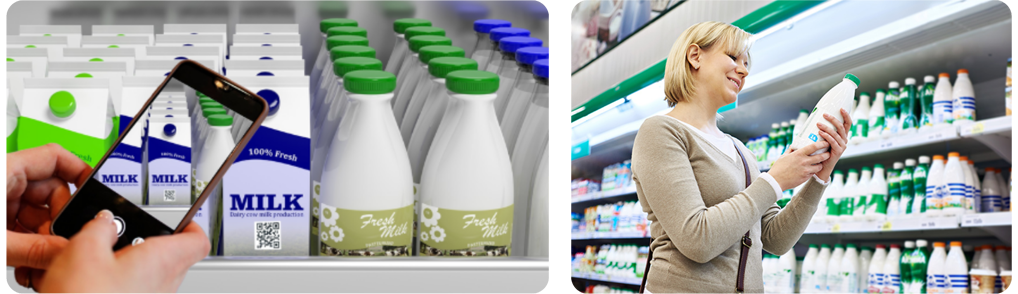
Traceability is therefore becoming a central element of modern agriculture.
However, collecting isolated pieces of information or adding reporting activities at the end of the process does not create effective traceability. Companies need a connected infrastructure that captures, organises and shares reliable data throughout the entire production cycle.
At Dinamica Generale, we bring this vision to life through the concept of From Field to Food: an integrated approach that connects soil management, crop production, harvesting, feeding, nutrient recycling and food quality within one measurable, documented value chain.
For Dinamica Generale, traceability is not simply a compliance requirement. It is a way to improve the quality of decisions throughout the agricultural and food production process.
By collecting information at every relevant stage, businesses gain a clearer understanding of what happens in the field, during harvest, in storage, during feeding and throughout processing.This makes it possible to improve resource efficiency, reduce variability, strengthen quality control and create a more complete record of product origin.
The objective is to build a continuous data flow between machines, operators, farms, advisors and food companies.
This requires technologies that can measure physical quantities, analyse material composition, communicate across different equipment and make information accessible through digital platforms.
Dinamica Generale combines these capabilities through a connected ecosystem of NIR sensing, weighing solutions, ISOBUS-compatible electronics, cloud software and mobile applications.
Traceability starts before a crop is harvested.
Soil conditions, nutrient availability and fertilisation practices directly influence crop performance, resource use and environmental impact. For this reason, modern nutrient management must be based on measurement and documentation rather than uniform assumptions.
Through georeferenced analysis, agronomists and farmers can build a clearer picture of soil variability across different areas of the field. This information can then support the development of prescription maps and variable-rate application strategies.
Dinamica Generale technologies such as AGRINIR and DG-VRA support this process by linking field analysis, prescription maps and fertiliser application.
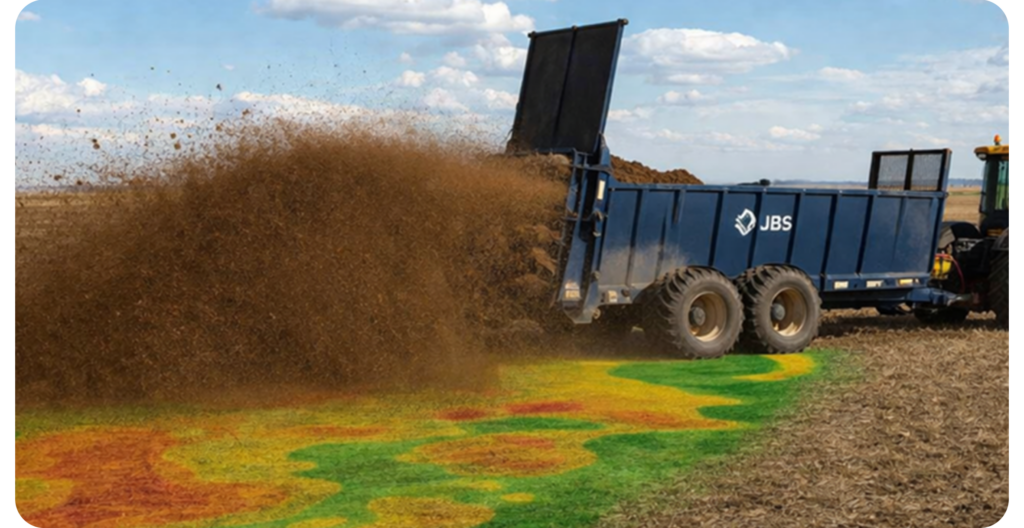
The same principle applies to organic fertilisers such as slurry and digestate. Their nutrient content can vary significantly, and their application should be based on actual composition rather than estimated averages.
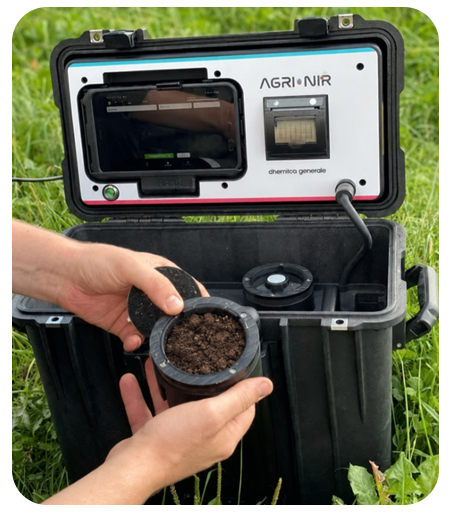
By analysing these materials in real time and documenting their application, farmers and contractors can manage them as measurable nutrient resources.
This creates a more precise approach to fertilisation, helping to improve nutrient-use efficiency while building a documented record of field operations.
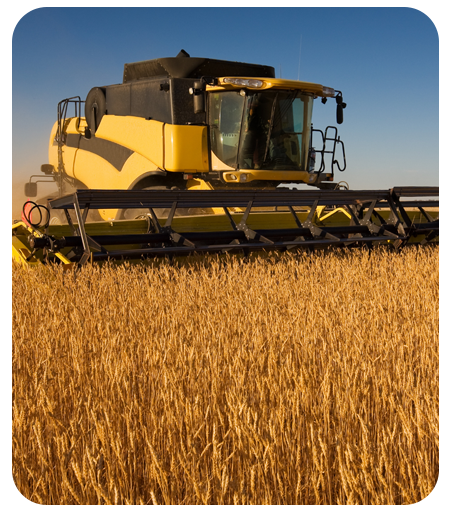
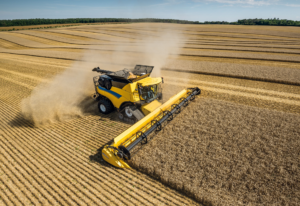
Harvest is one of the most important stages in the traceability chain.
At this point, a crop gains both a physical identity and a quality profile.To fully understand crop performance, businesses need to link harvested quantities with data such as moisture, dry matter, protein, starch, fibre and other parameters that influence storage, feed value, processing performance and commercial value.
Dinamica Generale combines on-machine NIR sensing with weighing technologies and cloud-based data management to support this process.
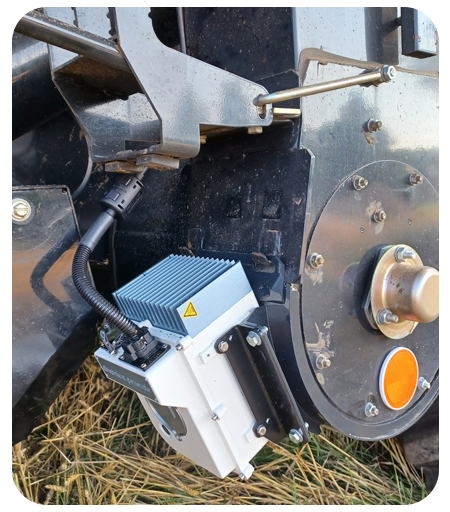
EVONIR can be installed on a wide range of agricultural machines, including combine harvesters, forage harvesters, balers, forage wagons and slurry tankers. During operation, the system continuously analyses the material flow, providing real-time information on composition.
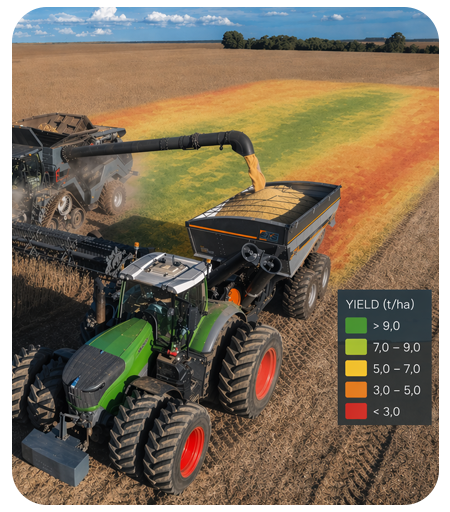
By combining NIR data with weighing data, GPS information and operational records, operators can create a detailed digital profile for every harvested load.
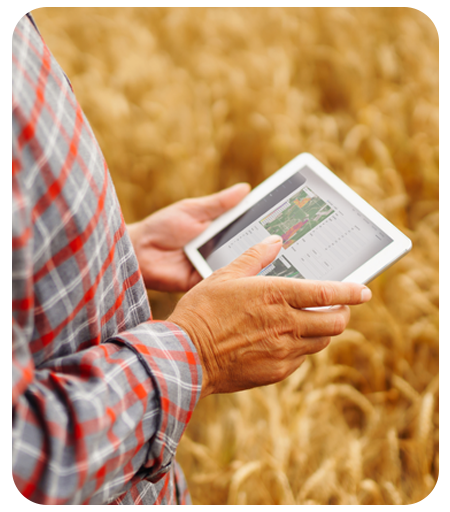
This profile can include the field of origin, the time of harvest, the quantity collected, the crop quality and the final destination of the material. Through FIELD trace, the information can be organised into quality maps, yield maps, load registers and traceability reports.
Harvest data therefore becomes more than a production record. It becomes a management resource that can support agronomic decisions, storage planning, commercial negotiations and feed management.
For livestock and dairy operations, the traceability process continues after harvest.
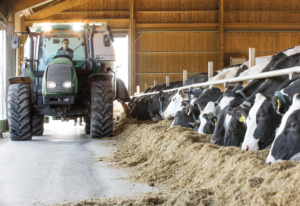
Forage, cereals and other ingredients produced in the field become part of the animal ration. Their actual composition influences feeding consistency, ration accuracy, inventory management and production performance.This creates a direct connection between crop quality, feeding operations and the quality of the final food product.
Dinamica Generale supports this connection through weighing systems, NIR technology and DTM – Daily TMR Manager. Together, these tools provide a structured approach to feeding management, allowing farms and nutritionists to monitor loaded ingredients, ration execution, stock levels, feeding costs and key performance indicators.
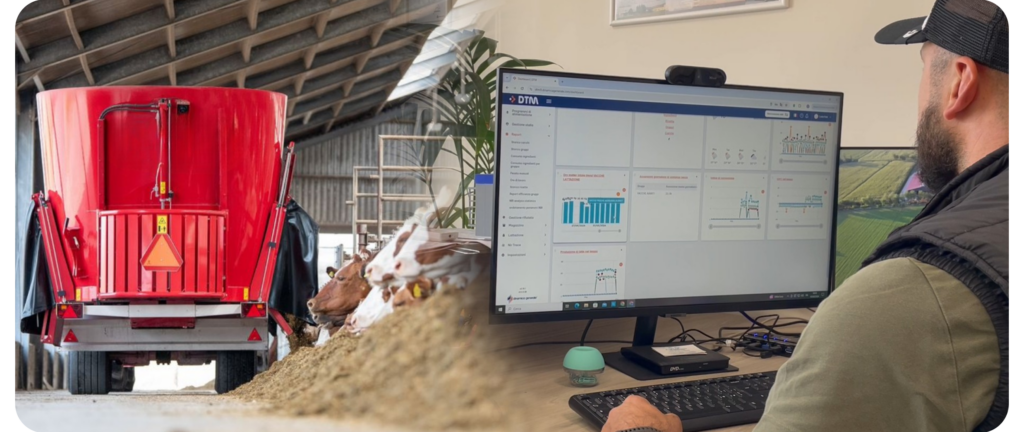
DTM is designed to make feeding operations more measurable and accessible. It connects data from the feed mixer to a cloud-based management environment, helping farms maintain greater visibility over daily activities and longer-term performance.
When combined with real-time quality analysis, this approach enables feeding decisions to be based on the actual characteristics of ingredients rather than only on theoretical values.
The result is a more consistent and traceable connection between what is grown, what is fed and what is produced.
A modern food value chain cannot be considered complete without addressing nutrient recycling.
In a circular agricultural system, manure and digestate are not simply by-products. They are resources that can return to the soil and contribute to the next production cycle.
For this process to be managed effectively, nutrient composition and application must be measured and documented.
Dinamica Generale technologies support the analysis of slurry, digestate and biogas feedstocks, helping operators understand the composition of the materials they manage. When this information is connected with field data and application records, organic fertilisers can be distributed with greater precision.
This makes it possible to connect the main stages of the circular cycle:
The value of this model lies in its measurability. Without reliable data, circularity remains a general objective. With measurement, it becomes a documented operational process that can be monitored, improved and demonstrated over time.
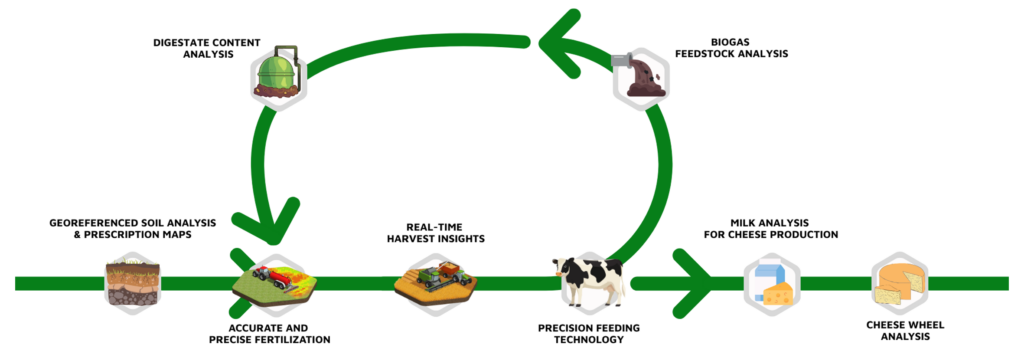
Traceability does not end when a crop is harvested or when milk leaves the farm.
Food processors, dairy companies and retailers need reliable information about origin, quality and production practices. They require stronger visibility over raw materials, production conditions and quality parameters throughout the supply chain.Dinamica Generale supports this need through technologies that can be applied not only in the field and on the farm, but also during food processing and quality control.
NIR solutions such as X-NIR can support rapid, non-destructive quality checks on raw materials and finished products. In industrial applications, in-line NIR systems can contribute to continuous process monitoring and quality management.
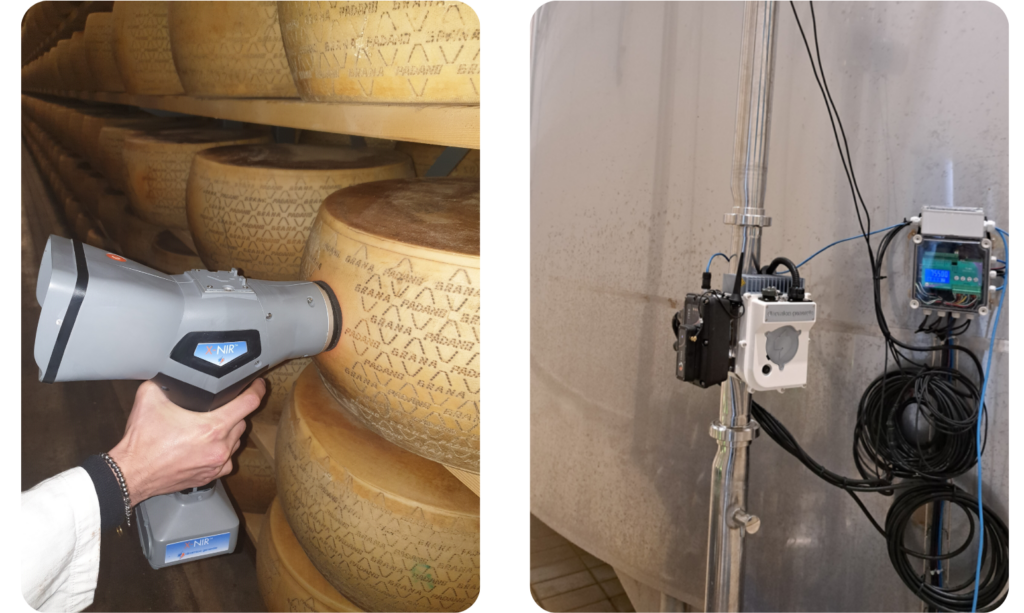
This creates a stronger link between agricultural production and the final product delivered to the market.
From crop quality and feed composition to milk, cheese and other food products, every stage can contribute to a more complete and verifiable production story.
The strength of the Dinamica Generale approach lies in the integration of complementary technologies.
NIR sensing provides insight into the composition of crops, feed, slurry, digestate and food products. Weighing systems measure the quantities moving through the production process. ECUs and ISOBUS-compatible solutions enable communication across machines and equipment. Cloud platforms and mobile applications transform raw measurements into usable information.
These technologies are designed to work as part of a connected ecosystem.
FIELD trace supports the management of field operations, harvesting data and traceability records. DTM supports feeding management, inventory control and operational performance. Together, they create a link between crop production, animal nutrition and food production.
This integrated architecture allows data to move from the field to the office, from machine to cloud and from one stage of the production process to the next.
The future of food production will depend on the ability to combine productivity, quality, transparency and responsible resource management.
For Dinamica Generale, this means enabling farms, contractors, OEMs and food companies to measure what matters, connect information and make better decisions throughout the value chain.
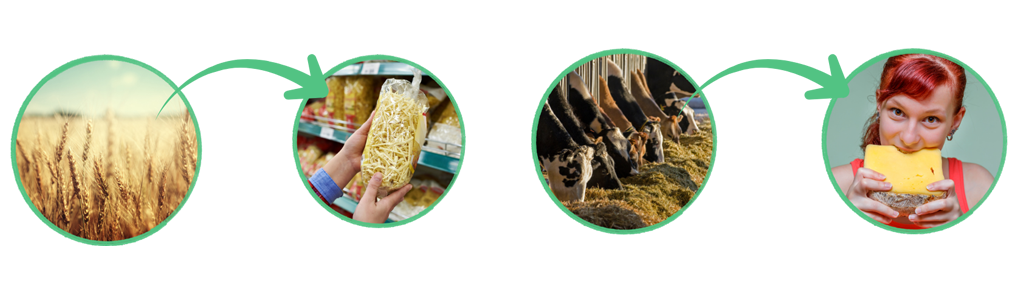
From soil preparation to harvesting, from feeding to nutrient recycling, and from raw material to finished product, traceability becomes a practical foundation for more efficient and more sustainable food production.
Field-to-food traceability is the ability to connect information from crop production and harvesting through feeding, animal production, processing and final food output. It helps document how materials were produced, handled, measured and transformed.
NIR technology provides rapid information about quality parameters in crops, forage, feed, slurry, digestate and selected food products. When these measurements are linked to field, batch or operational records, they become a valuable part of the traceability system.
Traceability helps farms connect feed quality, ingredient quantities, ration preparation and animal performance. This supports more consistent feeding, improved stock management, lower waste and more informed production decisions.


 NIR & Imaging
 Data Management
 Mobile Apps
 Load Cells
 Indicators and ISOBUS-ECU
 Accessories
 English
 Italian
 Spanish
 French
 German
 Portuguese (Brazil)
 Dutch
Dutch Polish
 Chinese (Simplified)
 Turkish
