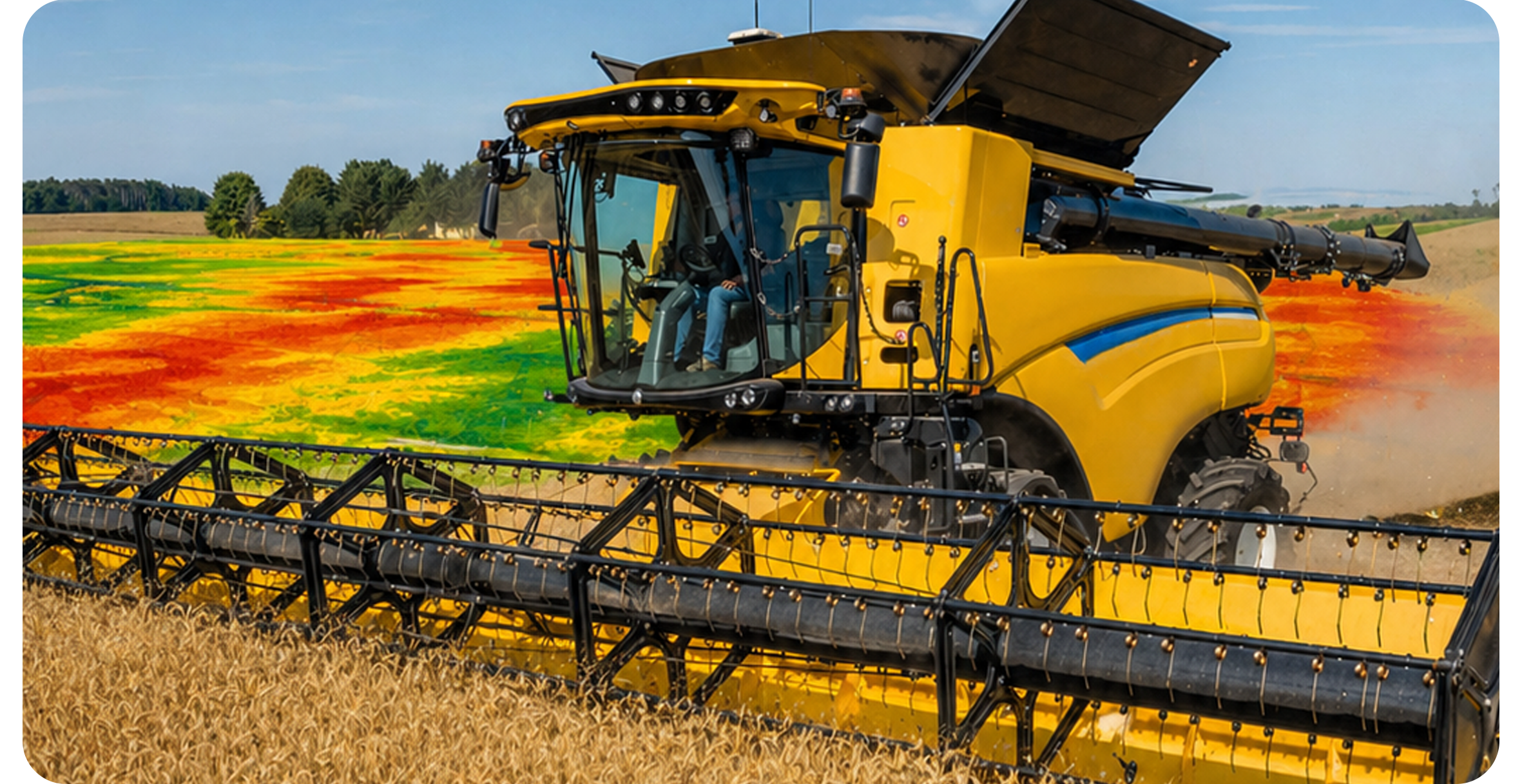
Grain traceability is becoming a strategic requirement for the entire agri-food value chain. It is no longer enough to know how much grain has been harvested. Producers, contractors, collection centres, millers and food companies increasingly need to know where the grain comes from, how it was harvested, what its quality is and how this information can be connected up to the finished product.
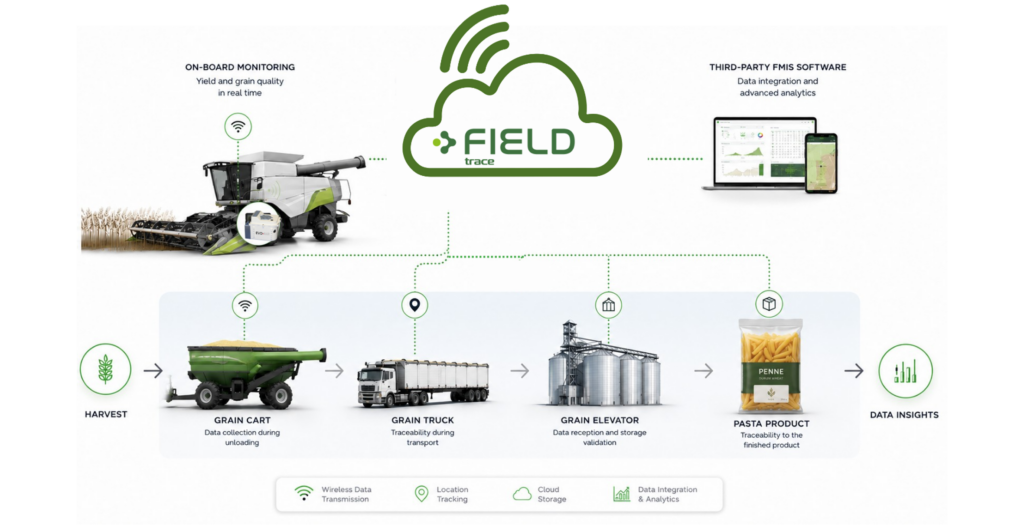
Dinamica Generale technologies support this process by combining real-time NIR analysis, precision weighing, GPS data and digital records. This creates a continuous traceability path from the combine harvester to the grain cart, from trailers and storage facilities to collection centres, and finally to milling and food production.
For products such as pasta, this means building a stronger and more reliable connection between the finished product and the grain from which it originated.
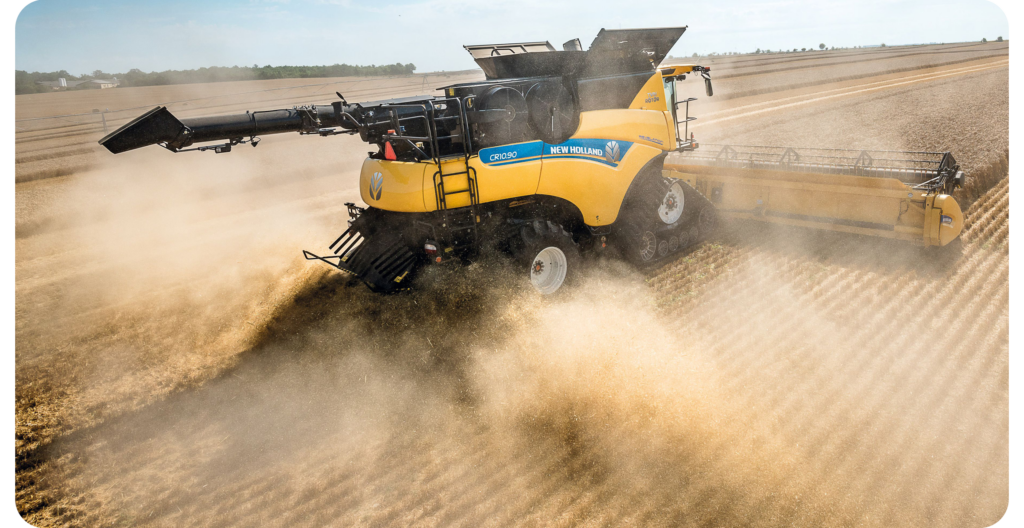
Grain traceability begins in the field, at the exact moment of harvest.
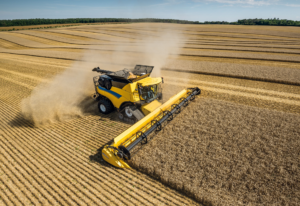
With an EVONIR analyser installed on the combine harvester, key quality parameters can be monitored continuously while the crop flows through the machine. Instead of relying only on post-harvest laboratory analysis, operators can access real-timeinformation on the actual composition of the harvested grain.
Depending on the crop and calibration, EVONIR can measure parameters such as:
This allows quality to be linked directly to the field, the harvesting operation and the specific load. The result is a more complete understanding of crop variability, not only in terms of yield but also in terms of nutritional and commercial value.
For grain producers and contractors, this information can support faster decisions during harvest, such as separating batches by quality, managing storage destinations more accurately or identifying field zones with different agronomic performance.

Quality data alone is not enough to build a complete traceability system. Each load must also be associated with accurate weight information.
A Dinamica Generale weighing system installed on the grain cart records the quantity harvested from each field or field zone. This makes it possible to connect the qualitative profile measured by EVONIR with the actual harvested volume.
By combining:
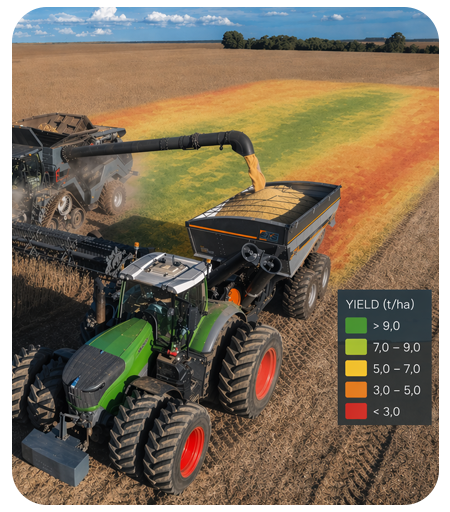
This digital profile becomes the foundation of grain traceability. It documents not only the quantity of grain moved through the field, but also its origin and quality characteristics.
For farms, contractors and agri-business operators, this creates a reliable base for yield analysis, quality mapping, logistics management and commercial evaluation.
After harvesting, grain is usually transferred from the grain cart to trailers, storage facilities or collection centres. This is one of the most critical points in the traceability chain, because information can easily be lost if data is not correctly connected to the load.
Dinamica Generale technologies make it possible to maintain the data trail during post-harvest logistics.
When grain is unloaded from the grain cart into a trailer or moved towards a storage facility, the load record can continue to include:
This creates a reliable connection between field production and post-harvest handling.
This becomes particularly valuable when operators need to separate grain by quality. For example, they can identify grain with higher protein content, different moisture levels or specific commercial characteristics and manage it as a separate batch.
In this way, traceability supports not only documentation, but also operational decisions such as storage planning, batch segregation and delivery management.
At the collection centre, the traceability chain can be strengthened with additional quality checks.
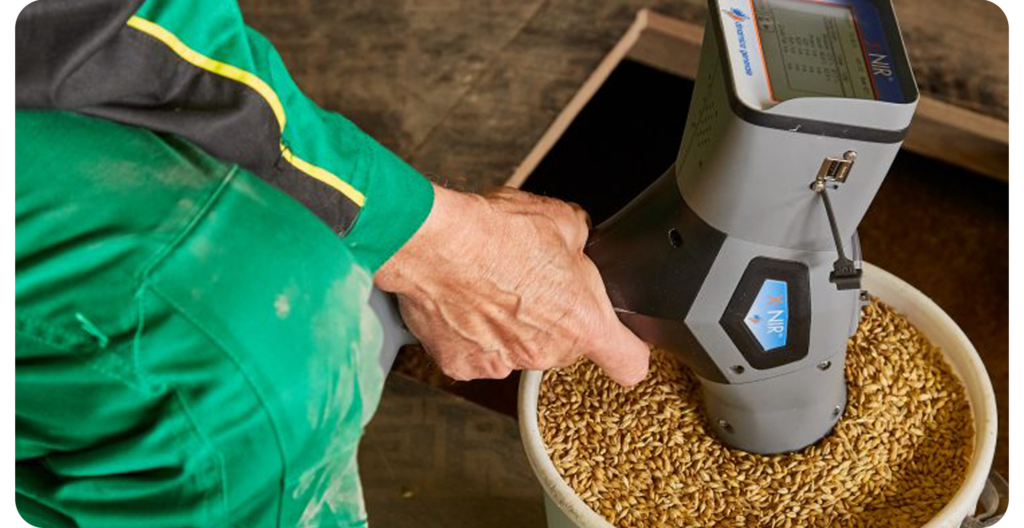
Incoming grain can be analysed using a portable NIR analyser or with an EVONIR analyser installed directly on the sampler. This allows operators to verify the quality of each incoming load immediately, without relying only on declared values or delayed laboratory results.
This step is essential for creating a more transparent relationship between suppliers, collection centres and downstream processors.
With real-time NIR analysis at intake, the operator can check parameters such as moisture, protein and other quality indicators.
This information can then be integrated with:
One of the main advantages is the possibility to pay suppliers according to actual measured quality, rather than only on declared or average values.
This creates a fairer and more data-driven commercial process. High-quality grain can be recognised and valorised, while storage and processing decisions can be based on objective measurements.
The result is a more transparent supply chain, where grain is differentiated not only by volume, but also by verified origin and measured quality.
The final value of grain traceability becomes clear when the data collected in the field and during logistics can support food production.
From the combine harvester to the grain cart, from transport and storage to milling and processing, Dinamica Generale technologies help build a continuous traceability path. For food products such as pasta, this means creating a stronger connection between the finished product and the grain from which it originated.
This traceability path can support:
For millers and pasta producers, having access to reliable information about grain origin, quality and handling can improve raw material selection and production consistency.
For the final market, traceability creates a more transparent product story by showing where the grain came from and how operators harvested, measured, classified and processed it.
Grain traceability requires more than a single measurement point. It requires a connected system able to follow the product across the entire value chain.
Dinamica Generale supports this process through complementary technologies:
By connecting quality, quantity, origin and destination, each grain load can become part of a documented and verifiable data chain.
For Dinamica Generale, grain traceability means transforming harvest and post-harvest operations into a measurable process, where every load carries reliable information from the field to the finished product.
From field to food, traceability becomes a way to prove quality, support transparency and create value across the grain supply chain.


 NIR & Imaging
 Data Management
 Mobile Apps
 Load Cells
 Indicators and ISOBUS-ECU
 Accessories
 English
 Italian
 Spanish
 French
 German
 Portuguese (Brazil)
 Dutch
Dutch Polish
 Chinese (Simplified)
 Turkish
