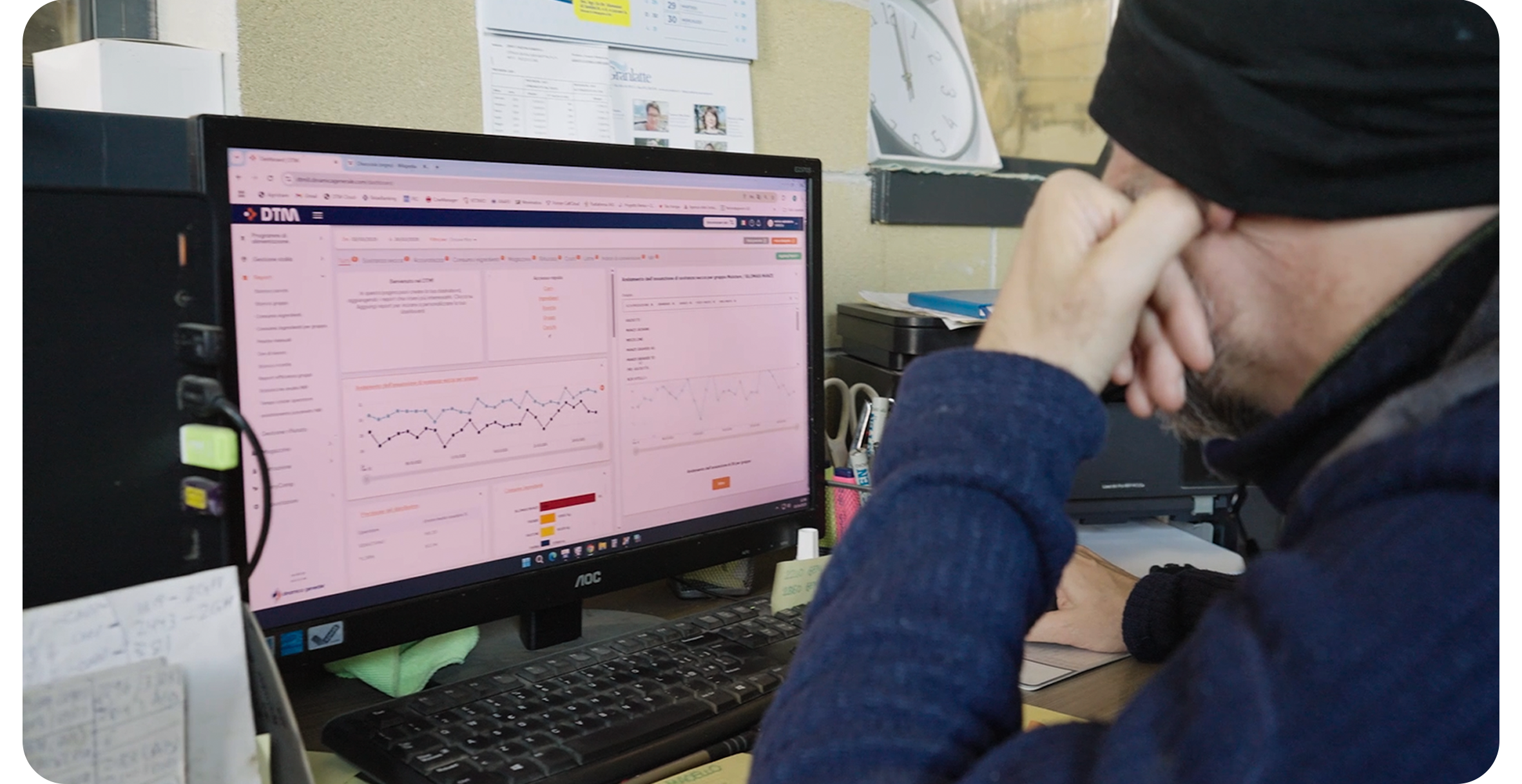
In modern dairy farms, data is not lacking.
The real difference lies in how data is transformed into meaningful reports and strategic decisions.
Reporting is not meant to “look at the past”, but to understand where the farm is heading and whether current choices are truly improving nutrition management, work organization, and farm economics.
In the video from which this article is derived, Cristian Rota explains which reports are truly essential and how to use them in a practical and effective way.
Today, there is a strong focus on KPIs (Key Performance Indicators). The risk, however, is having too many KPIs and using none of them effectively. According to Rota, dairy farms should select a limited number of key indicators, but choose those that clearly describe the farm’s direction and performance.
From an economic point of view, a central KPI is knowing:
In other words: feeding cost per 100 kg of milk produced.
This indicator directly links nutrition management and profitability. Alongside this, feed stock management plays a crucial role in understanding the real impact of losses.
There are costs that the mixer wagon alone cannot reveal. Without dedicated reports, these losses remain invisible.
From an operational standpoint, the most important reports focus on:
It is important to remember that milk production fluctuates throughout the year.
Reporting helps contextualize data, rather than analyzing figures in isolation.
Other key aspects to monitor include:
One of the most underestimated benefits of reporting is its impact on work organization. Data analysis allows dairy farms to:
Clear reports improve not only performance, but also daily operations in the barn.
Reporting truly delivers value when two key conditions are met.
This approach leads to work teams operating in sync, a shared vision of goals and faster and more consistent decision-making.
When everyone works with the same data, work quality improves.
And better work inevitably leads to positive economic returns.
Choosing the right KPIs, reading them correctly, and sharing them with the entire team allows dairy farms to:
Data becomes truly powerful only when it guides strategic decisions.
Watch the full video, click here!


 NIR & Imaging
 Data Management
 Mobile Apps
 Load Cells
 Indicators and ISOBUS-ECU
 Accessories
 English
 Italian
 Spanish
 French
 German
 Portuguese (Brazil)
 Dutch
Dutch Polish
 Chinese (Simplified)
 Turkish
