
Feed costs represent one of the most important operating expenses on a dairy farm. At the same time, feeding decisions directly affect ration consistency, dry matter intake, daily operations and overall farm performance.
This is where feed management software can make a difference.
A digital feed management system helps dairy farms plan and control feeding activities, monitor feed usage, manage inventories and analyze feeding performance. By connecting what happens during ration preparation and delivery with farm data, farmers and nutritionists can make more informed decisions and identify inefficiencies more quickly.
The goal is simple: feed more accurately, reduce unnecessary waste and keep feeding costs under control.
Feed management software is a digital system designed to help dairy farms manage and monitor the daily feeding process.
Instead of relying on manual records or disconnected information, farmers can use a single platform to organize recipes, ingredients, feeding groups and daily feeding activities.
Connect the software to the feed mixer weighing system to collect data from loading and unloading operations.
This creates a continuous flow of information between the feeding plan, the feed mixer and farm management.
For feeders, this means clear instructions during daily operations. For farm managers, it means greater visibility over costs, inventories and performance. For nutritionists, it provides useful feeding data to compare the nutritional strategy with what is actually happening on the farm.
Reducing feed costs does not simply mean using less feed. It means using available ingredients more efficiently and reducing the differences between the planned feeding strategy and daily execution.
Feed management software supports this process in several ways.
Small loading errors repeated every day can create significant differences between the planned ration and the ration actually prepared.
A connected feeding system guides operators during loading and unloading operations and records what actually happens during each feeding cycle.
Monitoring operator accuracy makes it easier to identify deviations from the feeding plan and improve consistency over time.
More accurate feeding also helps ensure that the ration formulated by the nutritionist is reproduced as consistently as possible during daily operations.
Feed refusals provide valuable information about how much feed animals actually consume.
By recording refusals and combining them with feeding data, farms can obtain a more accurate picture of Dry Matter Intake (DMI) and identify changes over time.
This information can help farm managers and nutritionists evaluate whether feeding quantities need to be reviewed and reduce unnecessary feed waste.
Monitoring dry matter is especially important because forage moisture can change considerably over time. Looking only at kilograms of fresh matter may therefore provide an incomplete picture of actual nutrient intake.
Effective feed inventory management is another important part of controlling feeding costs.
Feed management software can help farms monitor ingredient usage and stock levels based on daily feeding activities.
This makes it easier to understand how quickly ingredients are being consumed, anticipate purchasing requirements and identify unexpected differences between expected and actual usage.
Better inventory visibility can also reduce the risk of running out of critical ingredients and support more accurate feed cost analysis.
Collecting data is useful only if that information can be easily understood and used.
A feed management dashboard brings key feeding indicators together in one place, allowing farm managers to monitor performance without manually combining information from different sources.
Depending on the farm configuration and available data, important KPIs can include:
Dry Matter Intake, IOFC, feed refusals, operator accuracy, feeding times, ingredient inventories and other feeding performance indicators.
Farmers can track these metrics over time to identify trends and compare performance. They can also quickly spot areas that need attention.
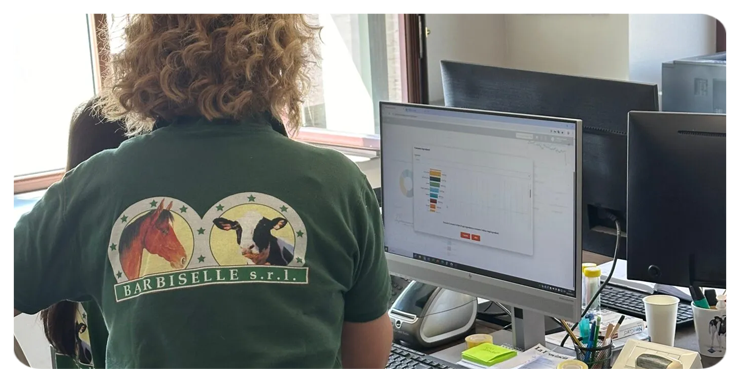

Cloud-based feed management software gives farmers access to feeding information beyond the feed mixer.
Instead of leaving operational data isolated on the machine, feeding information can become part of a connected digital process.
Farm managers and nutritionists can access current and historical feeding data from compatible connected devices, review performance and maintain greater visibility over feeding operations even when they are not physically next to the machine.
This is particularly useful for farms where different people are involved in ration planning, preparation, distribution and performance monitoring.
One of the main advantages of digital feed management is the ability to connect what should happen with what actually happens.
A feeding plan defines recipes, ingredients, groups and quantities. The weighing system supports the operator while the ration is being prepared and distributed. The software then collects feeding data and makes it available for analysis.
This creates a closed digital process: Plan – Execute – Monitor – Improve
Instead of managing feeding as a series of separate activities, farms can create a more connected workflow in which information generated during daily operations becomes useful for future decisions.
Modern feed mixers can generate valuable operational data during every feeding cycle.
Connect this information to a cloud-based feed management system, and the feed mixer becomes more than a machine for preparing and distributing rations.
It becomes a source of data for the farm’s precision feeding strategy.
Information about ingredient loading, ration preparation, unloading, feeding times and operator performance can contribute to a better understanding of how consistently the feeding plan is being executed.
This connection between machinery, weighing technology and software is an important part of the DG Precision Feeding Ecosystem.
DTM by Dinamica Generale is a cloud-based feed management software developed to connect feeding planning, daily operations and performance monitoring.
DTM allows farmers and nutritionists to manage feeding information within one digital environment and monitor key aspects of the feeding process, including recipes, feeding groups, ingredient inventories, feed costs and operational performance.
Combined with compatible Dinamica Generale weighing systems and the DTM App, feeding instructions and data can move between the farm, the operator and the feed mixer.
The result is a connected feeding process designed to provide greater visibility over how feed is prepared, delivered and managed every day.
For dairy farms, the value of feed management software comes from turning daily feeding operations into measurable information.
It can help farms:
Improve ration preparation accuracy, monitor feed usage and refusals, maintain better control over ingredient inventories, track Dry Matter Intake, evaluate feeding costs, monitor operator performance and identify changes in feeding efficiency over time.
Rather than replacing the experience of the farmer or nutritionist, feed management software provides them with better data to support their decisions.
Feed management software helps dairy farms plan, execute and monitor feeding activities. It can be used to manage recipes, ingredients and feeding groups while collecting data from daily ration preparation and distribution.
It can help identify loading inaccuracies, excessive refusals, unexpected ingredient consumption and other feeding inefficiencies. This gives farm managers more information to control feed usage and reduce unnecessary waste.
Cloud-based feed management software stores and manages feeding information through an online platform. This allows authorized users to access feeding data from compatible connected devices without relying only on information stored locally on the feed mixer.
Yes. When the required feeding and dry matter information is available, feed management software can help monitor Dry Matter Intake and its variation over time, providing a more accurate view of actual feed consumption than fresh weight alone.
Compatible weighing and connectivity technologies can transfer feeding information from the feed mixer to digital applications and cloud platforms. With Dinamica Generale solutions, compatible weighing systems can work together with the DTM App and DTM cloud environment to create a connected feeding process.
Precision feeding depends not only on formulating the right ration, but also on preparing it accurately, delivering it consistently and understanding what happens during daily feeding operations.
Feed management software connects these steps and transforms daily feeding data into information that farmers and nutritionists can use to monitor performance and improve their feeding strategy.
With DTM, Dinamica Generale brings together weighing technology, connected feeding operations and cloud-based data management in one precision feeding ecosystem.
Discover DTM feed management software and bring your daily feeding operations into a connected, data-driven process.


 NIR & Imaging
 Data Management
 Mobile Apps
 Load Cells
 Indicators and ISOBUS-ECU
 Accessories
 English
 Italian
 Spanish
 French
 German
 Portuguese (Brazil)
 Dutch
Dutch Polish
 Chinese (Simplified)
 Turkish
